 "Accurate & Affordable Drug Testing"
QUESTIONS? CALL US: (925) 289-8113 |

| |
Welcome To the BioTechScreening Blog
Sunday, August 26, 2012
LABORATORY CERTIFICATIONS
From Norchem Laboratory
Urinalysis drug-testing conducted under the authority of the Court should require or mandate a high “Forensic Standard” that will insure the accuracy and “Legal Defensibility” of those test results. This “Forensic Standard” is directly aligned with the level of “Certification” of the laboratory conducting the urinalysis testing. The following details the historic development of the three (3) major “Certification Programs” for drug testing laboratories.
 SAMHSA was created in response to demands for scientific and technical standards for Federal Workplace Drug Testing Programs and for the certification of laboratories engaged in urine drug testing for federal agencies. SAMHSA is distinguished from CLIA by its strict emphasis on “Legal Defensibility” and by its deliberately restricted regulatory scope; it is limited to urine testing for five drug classes. The SAMHSA Guidelines that insure “Legal Defensibility” include: 1) rigorous chain-of-custody for the collection, testing, and storage of the specimens, 2) strict laboratory security with restricted laboratory access and locked specimen storage, 3) precise requirements for quality assurance, 4) performance testing specific to urine assays for five drug classes, 5) specific educational requirements for laboratory personnel to insure their credibility as Forensic Drug Testing Experts. The SAMHSA Guidelines make it clear that they do not apply to drug testing performed under any legal authority other than the Mandatory Federal Workplace Drug Testing
CAP-FUDT - 1988 (College of American Pathologists/Forensic Urine Drug Testing)The gap left between CLIA and SAMHSA made the development of a separate laboratory certification program essential to insure the protection of individual rights and the “Legal Defensibility” of forensic urine drug testing outside the limited context of federal programs. In 1988 CAP, in consultation with the American Association for Clinical Chemistry, developed the FUDT accreditation program designed specifically for non-federal workplace drug testing. It was modeled after the SAMHSA program and includes the five items above to insure “Legal Defensibility” but the scope of the program was expanded to cover any drug test performed on urine. The objective of the CAP-FUDT program is to improve the quality of laboratory services so that all testing is performed in a scientific and “Legally Defensible” manner. The CAP-FUDT program emphasizes the importance of confirmatory tests to meet forensic requirements.
CLIA – 1988 (Clinical Laboratory Improvement Act of 1988)
CLIA was enacted to insure that all laboratories provide accurate results for medical diagnosis and treatment decisions. CLIA has applied a single set of requirements that apply to almost all laboratory testing of human specimens. CLIA also established enforcement procedures and sanctions applicable when laboratories fail to meet standards. Compared to most clinical tests, the legal consequences of a positive urine drug test may be severe and present a heightened probability of a legal challenge. Therefore, drug tests are considered “Forensic Testing”. However, the CLIA laboratory certification program does not provide for chain-of-custody procedures and documentation, quality assurance and performance testing specific to forensic urine drug testing (FUDT) such as confirmation procedures. Additionally, CLIA does not specifically have trained inspectors to perform on-site evaluation of forensic laboratories. Labels: clia, fda, justice, laboratory, testing, urine, workplace by: BioTechScreening 0 Comments 
Sunday, March 25, 2012
 This is the one matrix that has made a significant impact on drug testing within the USA. In criminal justice, for example, the field continues to attract more females than males and when 90% of persons under supervision are male, an observed specimen collection becomes burdensome. Oral fluids provide a gender neutral observed specimen collection. This is the one matrix that has made a significant impact on drug testing within the USA. In criminal justice, for example, the field continues to attract more females than males and when 90% of persons under supervision are male, an observed specimen collection becomes burdensome. Oral fluids provide a gender neutral observed specimen collection.In addition, urine is susceptible to test tampering while oral fluids, with a few safeguards, seems virtually immune to this. Studies from the University of Maryland suggest that oral fluids are as accurate as urine in detecting drugs of abuse with the exception of marijuana. There is very little THC in oral fluids and the detection of this drug therefore becomes problematic. Some drug tests on the market claim to detect this drug through a metabolite of marijuana, but there is so little of this that you will never get a positive for marijuana. One of the down sides of onsite oral fluid testing is that these tests do require a longer run time than their urine counterparts, they are more expensive and do not test for as many drugs. Oral fluids has become very popular in the workplace in that rather than sending an employee or prospective employee to a clinic for a urine draw, which can be very expensive, an onsite nurse can conduct an oral fluid test. Additionally, the vast majority of urine collections at clinics are unobserved which renders them susceptible to a wide variety of test tampering techniques including substitution, hydration and adulteration. In new hire situations this also enables a company to hire a prospect immediately instead of waiting several days for a result thus running the risk to losing that prospect to another company. Finally, oral fluid testing does solve the problem of shy bladder syndrome. Labels: gender, marijuana, oral_fluids, urine, workplace by: BioTechScreening 0 Comments
Laboratory Testing  The screening of urine was primarily conducted at offsite laboratories during the 1990s. With the dramatic increase in the accuracy and reliability of onsite drug tests, however, they have supplanted laboratories and become the screening method of choice due their accuracy and a myriad of other advantages: The screening of urine was primarily conducted at offsite laboratories during the 1990s. With the dramatic increase in the accuracy and reliability of onsite drug tests, however, they have supplanted laboratories and become the screening method of choice due their accuracy and a myriad of other advantages:Often referred to as immediate VS delayed result testing, onsite enable you to know within a couple of minutes if the person before you is drug-free. In criminal justice the process used to be that once a result was received from a laboratory (several days to a couple of weeks) the donor must be tracked down and confronted. Frequently the donor would deny usage and the first order of business was penetrating that denial which we know can be a difficult and time consuming process. Onsite testing inevitably yields a high percentage of admissions enabling the tester to take immediate action as there is no denial to penetrate. This is generally better for the donor as well in that the sooner in the cycle of addiction that drug usage is detected, the less severe the addiction. It also adds measurably to community protection in that crime supporting criminal behavior is not allowed to continue until the donor has been confronted. In many situations admissions obviate the need for confirmatory testing which will always be the most expensive part of any testing program. Many prefer admissions to confirmations in that the donor admits usage and a curative course of action may be established. It also enables the tester to reward and support a donor’s sobriety, the positive role of drug testing. Rapid result testing also provides a far higher level of deterrence in that the donor realizes that they will be held responsible immediately for a positive result. With delayed result testing donors are able to delude themselves into thinking the drug will degrade in the urine by the time it is tested or it may be lost in transit, etc. Lab screening, because it incurs the shipping cost to the lab, is generally more expensive than onsite screens. One advantage to lab screens is that the specimen is interpreted by an instrument, not the human eye, thus removing the issue of subjectivity. Confirmatory testing is only conducted at a laboratory by either GC/MS or LC/MS/MS, a crucial component for any drug testing process. We at Biotech Screening have established partnerships with both a SAMHSA (Substance Abuse Mental Health Services Administration) Certified lab as well as a CAP (College of American Pathologists) certified lab for confirmatory testing as well as testing for EtG, Spice, Bath Salts and 6-AM. Labs that hold one of these two certifications are held to the highest standards for accuracy and are a good fit with any effective drug-testing program. At this time only a laboratory can test for Bath Salts, EtG and 6-AM. EtG (Ethylglucuronide) measures a biomarker in urine and is clearly the best means to test for ethanol. We prefer testing at a higher level for EtG and even though this may not provide as long a window of detection, it helps eliminate legitimate means of alcohol absorption, such as hand creams, etc., or incidental exposure. There are literally thousands of items which contain ethanol which one may be exposed to on any given day and this test is additive. 6-Acetylmorphine (6AM) is a test is to detect heroin use. 6-Acetylmorphine is excreted in the urine as a consequence of heroin use; other opiates do not cause excretion of this metabolite. In order to be effective, however, it must be very recent usage with a high concentration of heroin still in the urine. If a donor has a past history of heroin usage and produces a specimen positive for opiates, it may be a prudent expenditure to call the laboratory, determine the nanogram level of the specimen and then decide whether to have a 6-AM test conducted. Labels: laboratory, spice, urine by: BioTechScreening 2 Comments
1. Hair has always been plagued by questions of external contamination and “racial bias” (dark hair follicles retain drugs longer than dark hair). The results are delayed causing community protection concerns. The clear advantage is that it can detect drugs for up to three months, though episodes of usage and drug differentiation may prove difficult. 2. Oculomotor is gender neutral, un-invasive and inexpensive. Critics claim that it misses too many true positives due to a shorter window of detection and some suggest that areas like fatigue can be misread by an instrument. It does not have the ability to differentiate between substances and measures impairment rather than usage. There are no established studies, standards or case law regarding its legal defensibility. 3. Sweat patches offer continuous monitoring but seem to fall off and are subject to tampering. They are gender neutral but are expensive and have never seemed to have caught on for various reasons. 4. Oral fluids enjoy the benefit of being a gender neutral process and seems virtually immune to tampering. Oral fluid testing devices are also as accurate as the other matrices in detecting drugs of abuse except for marijuana. There is very little THC in oral fluids and if the detection of this drug is important to your program, this may not be your matrix of choice. It is also a more dangerous bodily fluid when compared to urine which is sterile. 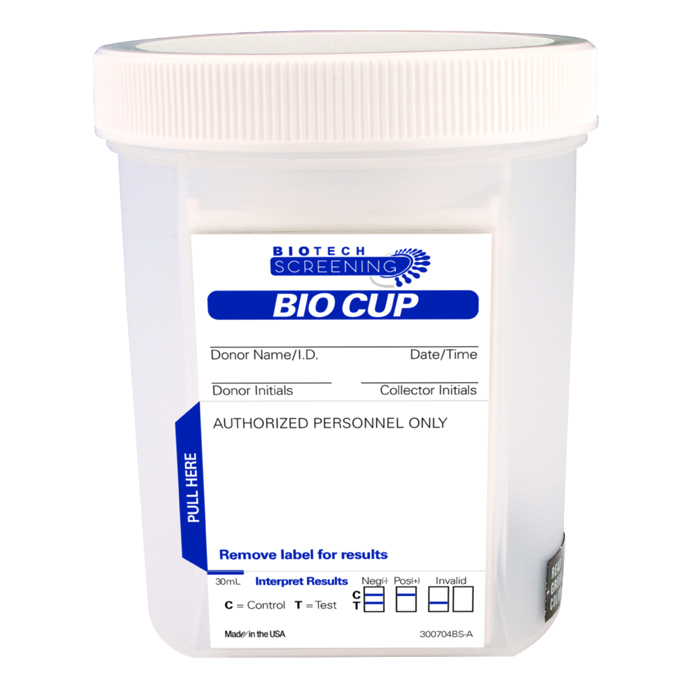 5. Urine. This is and will continue to be the matrix of choice for at least the near term. Drugs and their metabolites are highly concentrated in urine and it is an inexpensive means to test for a wide variety of drugs. Devices are FDA cleared and the standards well established. Panels are easily customizable allowing tailoring a regimen for a specific area. It appears to be the most legally defensible means to test for drugs of abuse. It is, however, subject to test tampering and effective programs should consider having specimen validity tests (SVT) available to insure the integrity of their drug testing process. Most adulterants take at least a few hours to work their magic so the best time to administer an SVT is at the time of collection. 5. Urine. This is and will continue to be the matrix of choice for at least the near term. Drugs and their metabolites are highly concentrated in urine and it is an inexpensive means to test for a wide variety of drugs. Devices are FDA cleared and the standards well established. Panels are easily customizable allowing tailoring a regimen for a specific area. It appears to be the most legally defensible means to test for drugs of abuse. It is, however, subject to test tampering and effective programs should consider having specimen validity tests (SVT) available to insure the integrity of their drug testing process. Most adulterants take at least a few hours to work their magic so the best time to administer an SVT is at the time of collection.Screening is available on our on-site devices and via our laboratory services for drug abuse testing kits. Labels: clia, devices, fda, hair, marijuana, matrix, oral_fluids, urine by: BioTechScreening 0 Comments
Sunday, March 4, 2012
BEST PRACTICES EVALUATING YOUR URINE DRUG-TESTING PROGRAM By Eric, Ryan and James Fitzsimons There are several matrices available to test for drugs of abuse. The use of urine as the primary means to conduct these tests will not be supplanted in the near future. Drugs and their metabolites are highly concentrated in urine and more in known about this matrix than any other. It is the most legally defensible method. It is also a quick and inexpensive means to test and enables agencies to test more frequently thereby enhancing deterrence, the positive role of drug testing. Drug testing processes vary widely state-to-state, county-to-county, and office-to-office. There are many features that, in our opinion, separate effective drug-testing programs from those less effective. The following are the rank ordered features that are characteristic of the best programs, those that maximize detection and deterrence: Is your drug testing process fully randomized (no scheduled submissions)? In order to be truly effective, a drug testing process must be fully randomized. With the defeating of drug tests a multi-million dollar business in this country, any predictability will inevitably lead to test tampering. Scheduled drug tests invite donors to try to beat your system either by substitution, hydration or adulteration. Conducting fewer drug tests on a random basis is probably superior to conducting more tests on a scheduled basis. Do you at least occasionally test on weekends? The essence of deterrence is no safe drugs to use and no safe periods to use drugs. Testing on weekends is absolutely essential in deterring the casual user. For example, when testing does not occur on weekends, donors can safely use on Friday night and generally be “clean” by Monday. Absent at least occasional weekend tests, you give tacit approval to drug use. Are you using rapid-result testing devices? Any type of delayed-result testing is not a good fit with the criminal justice system. There are a myriad of advantages associated with rapid results including, but not limited to, a high degree of admissions. When admissions obviate the need for confirmatory testing, dramatic savings may be realized since confirmatory testing will always be the most expensive part of any testing process. Rapid results allow you to confront the user immediately and implement a curative course of action. It also allows you to know definitively when a donor is clean so that this behavior may be supported and/or rewarded. Is the rapid-result product that you use available over-the-counter or over the Internet? A product readily available to the donor enables them to: 1. Pre-test themselves before meeting with their correctional officer. If they test positive, they may delay the meeting until the drug has passed through their system. 2. Purchase the identical product so that they may analyze its performance characteristics, e.g. how much water must be ingested in order to fall below the cutoff level, how sensitive a product may be for a specific drug, etc., etc. With any sophistication, a donor will soon learn how to minimize the chances of submitting a positive specimen. 3. If the product is a cup device, it provides the donor a far better and easier means to substitute the urine of another. Do you use a SAMHSA or CAP Certified Laboratory for Confirmations? An essential component of any drug-testing process is the inclusion of a high-standard laboratory for confirmations. With either of these certifications, we know about the accuracy of a lab since there is a built-in check and balance system. When using a lab that holds neither of these certifications, we virtually know nothing about what or how well they are performing GC/MS confirmations. Some labs do not even perform GC/MS confirmatory tests. A true confirmation test must be able to provide semi-quantitative results, should include a routine validity check and have the capacity to report results at less than SAMHSA cutoff levels. Are confirmatory results reported out in LOD or LOQ levels? SAMHSA cutoffs were set for the workplace and are far too conservative for the criminal justice system. Limit of Detection (LOD) or Limit of Quantitation (LOQ) levels will establish that the donor absolutely used the drug in question but this is a lower level than SAMHSA. SAMHSA is, in fact, currently considering reducing the screen and confirmation levels for amphetamine, methamphetamine and cocaine in the belief that too many users are circumventing detection. A lower level of detection is a good fit with criminal justice in that it provides a much higher level of protection for your community. Some other areas, though not as critical: Do you always test for the same panel of drugs? Donors soon learn for which drugs they are likely to be tested. Drug substitution, such as switching stimulants, is commonplace when a donor’s freedom is on the line. In order to have an effective drug-testing program, donors should never be able to predict for what they will be tested on a given day. Is the supervising officer quickly notified of a positive screen? In order to be effective, a decision maker must be notified of a positive submission in a timely manner. With rapid-result testing, a probation officer may decide on a course of action before the drug-usage reaches addiction. The earlier in the addiction cycle that usage is detected, the less intensive and therefore less expensive the treatment response. Once again the community is best protected by early intervention. With laboratory, or delayed-result testing, once the result is finally received, the donor must be tracked-down and confronted. Most delayed-result testing results in denial of usage and the penetrating of this denial can be a difficult and time-consuming process. Ideally the PO should be notified on the same day the test is administered. Are you using a formalized admission form for positive submissions? In most instances an admission form obviates the need for a confirmatory test. Admissions are generally considered preferable to a confirmation in that the donor admits usage and a course of action may be formulated. With admissions there is no denial to penetrate and treatment may commence immediately. Many donors will also admit and sign an admission form prior to the test, which may save precious funds as well. Finally, many sites report that they get admissions, even when the screening and/or confirmation tests are negative. This is dealt with in different ways in different locations. Are collectors aware of subterfuge and how donors beat the test? Collectors must be aware of when to, and when not to, accept a specimen as creditable. Specimens which appear dilute, are a “neon” yellow, appear “strange” in any other manner or where the donor is exhibiting other substance abusing cues, should be held to a higher standard. The usage of a simple dipstick device on a judicious basis adds measurably to the credibility of any program. Strategically placed mirrors, etc., demonstrate that we care enough to make beating the test difficult. When donors can easily defeat a drug test, word spreads and impacts on the credibility of your program. Is every specimen tested for temperature? This is the number one guard against specimen substitution and provides additional integrity for your program. Are the testing devices you are using considered “aggressive”? An “aggressive” device is one that does not yield false-negative results. With false-negative results the donor knows they’ve used, as do their friends, but they are told they’re “clean” and sent on their way. This affords the community little in the way of protection. An aggressive device will detect usage at or around the cutoff level. It may occasionally yield a low level positive result, but this will be rectified during a confirmatory procedure. Devices need to be tested with “at-cutoff” controls to evaluate this criterion. Are the consequences for trying to beat a drug test greater than for a positive test? Absent greater consequences, this becomes a cat and mouse or catch-me-if-you-can process. What has a donor to lose if there is not a great sanction imposed? Is some “action” taken as a result of the first positive test? If a certain number of “positives” are condoned before action, this is tantamount to giving permission to limited “usage.” In order for a program to truly deter usage, there must be some “consequence” for any positive submission. Do you have access to 24/7/365 technical support? When questions such a cross-reactivity, interpretation, accuracy, sensitivity, etc., arise, they need to be addressed promptly. Do you have an evaluative process for measuring the actual effectiveness of your testing program? Many testing programs are perfunctory in nature with no means to measure effectiveness. What drugs do you commonly see? Are there drugs for which you routinely test that are rarely seen? Could you test for fewer drugs more often and have a better program? Are you keeping donors guessing or can they easily predict for what drugs they will be tested? Do you at least occasionally test for drugs not commonly seen (e.g. Oxycodone (OxyContin), Ecstasy, Darvon, etc.)? It is my belief that the most effective drug testing program at this time is the use of an aggressive rapid-result urine test on a random basis, a focus on admissions and the judicious use of a SAMHSA or CAP Certified laboratory with results reported out at LOQ or LOD levels. Labels: ecstasy, laboratory, oxy, testing, urine by: BioTechScreening 1 Comments
|
Previous Posts
Archives
Subscribe to |

| Customer Service Call US All content © 2011-2012
BioTechScreening. All rights reserved.
Powered by Deco Belle
|