 "Accurate & Affordable Drug Testing"
QUESTIONS? CALL US: (925) 289-8113 |

| |
Welcome To the BioTechScreening Blog
Sunday, August 26, 2012
LABORATORY CERTIFICATIONS
From Norchem Laboratory
Urinalysis drug-testing conducted under the authority of the Court should require or mandate a high “Forensic Standard” that will insure the accuracy and “Legal Defensibility” of those test results. This “Forensic Standard” is directly aligned with the level of “Certification” of the laboratory conducting the urinalysis testing. The following details the historic development of the three (3) major “Certification Programs” for drug testing laboratories.
 SAMHSA was created in response to demands for scientific and technical standards for Federal Workplace Drug Testing Programs and for the certification of laboratories engaged in urine drug testing for federal agencies. SAMHSA is distinguished from CLIA by its strict emphasis on “Legal Defensibility” and by its deliberately restricted regulatory scope; it is limited to urine testing for five drug classes. The SAMHSA Guidelines that insure “Legal Defensibility” include: 1) rigorous chain-of-custody for the collection, testing, and storage of the specimens, 2) strict laboratory security with restricted laboratory access and locked specimen storage, 3) precise requirements for quality assurance, 4) performance testing specific to urine assays for five drug classes, 5) specific educational requirements for laboratory personnel to insure their credibility as Forensic Drug Testing Experts. The SAMHSA Guidelines make it clear that they do not apply to drug testing performed under any legal authority other than the Mandatory Federal Workplace Drug Testing
CAP-FUDT - 1988 (College of American Pathologists/Forensic Urine Drug Testing)The gap left between CLIA and SAMHSA made the development of a separate laboratory certification program essential to insure the protection of individual rights and the “Legal Defensibility” of forensic urine drug testing outside the limited context of federal programs. In 1988 CAP, in consultation with the American Association for Clinical Chemistry, developed the FUDT accreditation program designed specifically for non-federal workplace drug testing. It was modeled after the SAMHSA program and includes the five items above to insure “Legal Defensibility” but the scope of the program was expanded to cover any drug test performed on urine. The objective of the CAP-FUDT program is to improve the quality of laboratory services so that all testing is performed in a scientific and “Legally Defensible” manner. The CAP-FUDT program emphasizes the importance of confirmatory tests to meet forensic requirements.
CLIA – 1988 (Clinical Laboratory Improvement Act of 1988)
CLIA was enacted to insure that all laboratories provide accurate results for medical diagnosis and treatment decisions. CLIA has applied a single set of requirements that apply to almost all laboratory testing of human specimens. CLIA also established enforcement procedures and sanctions applicable when laboratories fail to meet standards. Compared to most clinical tests, the legal consequences of a positive urine drug test may be severe and present a heightened probability of a legal challenge. Therefore, drug tests are considered “Forensic Testing”. However, the CLIA laboratory certification program does not provide for chain-of-custody procedures and documentation, quality assurance and performance testing specific to forensic urine drug testing (FUDT) such as confirmation procedures. Additionally, CLIA does not specifically have trained inspectors to perform on-site evaluation of forensic laboratories. Labels: clia, fda, justice, laboratory, testing, urine, workplace by: BioTechScreening 0 Comments 
Sunday, March 25, 2012
1. Hair has always been plagued by questions of external contamination and “racial bias” (dark hair follicles retain drugs longer than dark hair). The results are delayed causing community protection concerns. The clear advantage is that it can detect drugs for up to three months, though episodes of usage and drug differentiation may prove difficult. 2. Oculomotor is gender neutral, un-invasive and inexpensive. Critics claim that it misses too many true positives due to a shorter window of detection and some suggest that areas like fatigue can be misread by an instrument. It does not have the ability to differentiate between substances and measures impairment rather than usage. There are no established studies, standards or case law regarding its legal defensibility. 3. Sweat patches offer continuous monitoring but seem to fall off and are subject to tampering. They are gender neutral but are expensive and have never seemed to have caught on for various reasons. 4. Oral fluids enjoy the benefit of being a gender neutral process and seems virtually immune to tampering. Oral fluid testing devices are also as accurate as the other matrices in detecting drugs of abuse except for marijuana. There is very little THC in oral fluids and if the detection of this drug is important to your program, this may not be your matrix of choice. It is also a more dangerous bodily fluid when compared to urine which is sterile. 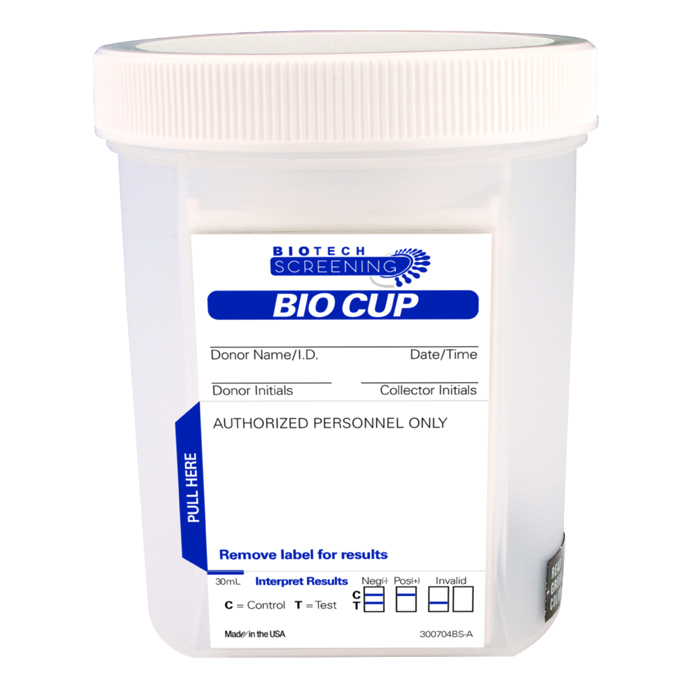 5. Urine. This is and will continue to be the matrix of choice for at least the near term. Drugs and their metabolites are highly concentrated in urine and it is an inexpensive means to test for a wide variety of drugs. Devices are FDA cleared and the standards well established. Panels are easily customizable allowing tailoring a regimen for a specific area. It appears to be the most legally defensible means to test for drugs of abuse. It is, however, subject to test tampering and effective programs should consider having specimen validity tests (SVT) available to insure the integrity of their drug testing process. Most adulterants take at least a few hours to work their magic so the best time to administer an SVT is at the time of collection. 5. Urine. This is and will continue to be the matrix of choice for at least the near term. Drugs and their metabolites are highly concentrated in urine and it is an inexpensive means to test for a wide variety of drugs. Devices are FDA cleared and the standards well established. Panels are easily customizable allowing tailoring a regimen for a specific area. It appears to be the most legally defensible means to test for drugs of abuse. It is, however, subject to test tampering and effective programs should consider having specimen validity tests (SVT) available to insure the integrity of their drug testing process. Most adulterants take at least a few hours to work their magic so the best time to administer an SVT is at the time of collection.Screening is available on our on-site devices and via our laboratory services for drug abuse testing kits. Labels: clia, devices, fda, hair, marijuana, matrix, oral_fluids, urine by: BioTechScreening 0 Comments
|
Previous Posts
Archives
Subscribe to |

| Customer Service Call US All content © 2011-2012
BioTechScreening. All rights reserved.
Powered by Deco Belle
|