 "Accurate & Affordable Drug Testing"
QUESTIONS? CALL US: (925) 289-8113 |

| |
Welcome To the BioTechScreening Blog
Sunday, March 25, 2012
 This is the one matrix that has made a significant impact on drug testing within the USA. In criminal justice, for example, the field continues to attract more females than males and when 90% of persons under supervision are male, an observed specimen collection becomes burdensome. Oral fluids provide a gender neutral observed specimen collection. This is the one matrix that has made a significant impact on drug testing within the USA. In criminal justice, for example, the field continues to attract more females than males and when 90% of persons under supervision are male, an observed specimen collection becomes burdensome. Oral fluids provide a gender neutral observed specimen collection.In addition, urine is susceptible to test tampering while oral fluids, with a few safeguards, seems virtually immune to this. Studies from the University of Maryland suggest that oral fluids are as accurate as urine in detecting drugs of abuse with the exception of marijuana. There is very little THC in oral fluids and the detection of this drug therefore becomes problematic. Some drug tests on the market claim to detect this drug through a metabolite of marijuana, but there is so little of this that you will never get a positive for marijuana. One of the down sides of onsite oral fluid testing is that these tests do require a longer run time than their urine counterparts, they are more expensive and do not test for as many drugs. Oral fluids has become very popular in the workplace in that rather than sending an employee or prospective employee to a clinic for a urine draw, which can be very expensive, an onsite nurse can conduct an oral fluid test. Additionally, the vast majority of urine collections at clinics are unobserved which renders them susceptible to a wide variety of test tampering techniques including substitution, hydration and adulteration. In new hire situations this also enables a company to hire a prospect immediately instead of waiting several days for a result thus running the risk to losing that prospect to another company. Finally, oral fluid testing does solve the problem of shy bladder syndrome. Labels: gender, marijuana, oral_fluids, urine, workplace by: BioTechScreening 0 Comments 
1. Hair has always been plagued by questions of external contamination and “racial bias” (dark hair follicles retain drugs longer than dark hair). The results are delayed causing community protection concerns. The clear advantage is that it can detect drugs for up to three months, though episodes of usage and drug differentiation may prove difficult. 2. Oculomotor is gender neutral, un-invasive and inexpensive. Critics claim that it misses too many true positives due to a shorter window of detection and some suggest that areas like fatigue can be misread by an instrument. It does not have the ability to differentiate between substances and measures impairment rather than usage. There are no established studies, standards or case law regarding its legal defensibility. 3. Sweat patches offer continuous monitoring but seem to fall off and are subject to tampering. They are gender neutral but are expensive and have never seemed to have caught on for various reasons. 4. Oral fluids enjoy the benefit of being a gender neutral process and seems virtually immune to tampering. Oral fluid testing devices are also as accurate as the other matrices in detecting drugs of abuse except for marijuana. There is very little THC in oral fluids and if the detection of this drug is important to your program, this may not be your matrix of choice. It is also a more dangerous bodily fluid when compared to urine which is sterile. 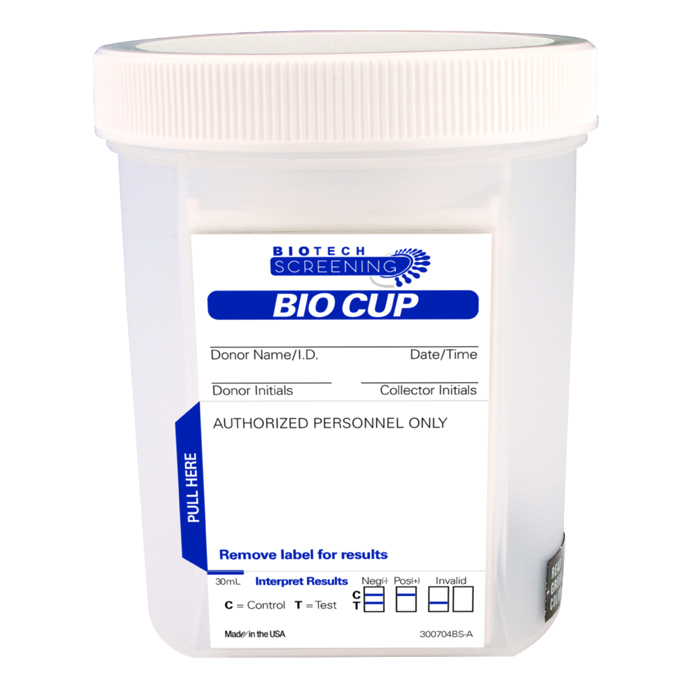 5. Urine. This is and will continue to be the matrix of choice for at least the near term. Drugs and their metabolites are highly concentrated in urine and it is an inexpensive means to test for a wide variety of drugs. Devices are FDA cleared and the standards well established. Panels are easily customizable allowing tailoring a regimen for a specific area. It appears to be the most legally defensible means to test for drugs of abuse. It is, however, subject to test tampering and effective programs should consider having specimen validity tests (SVT) available to insure the integrity of their drug testing process. Most adulterants take at least a few hours to work their magic so the best time to administer an SVT is at the time of collection. 5. Urine. This is and will continue to be the matrix of choice for at least the near term. Drugs and their metabolites are highly concentrated in urine and it is an inexpensive means to test for a wide variety of drugs. Devices are FDA cleared and the standards well established. Panels are easily customizable allowing tailoring a regimen for a specific area. It appears to be the most legally defensible means to test for drugs of abuse. It is, however, subject to test tampering and effective programs should consider having specimen validity tests (SVT) available to insure the integrity of their drug testing process. Most adulterants take at least a few hours to work their magic so the best time to administer an SVT is at the time of collection.Screening is available on our on-site devices and via our laboratory services for drug abuse testing kits. Labels: clia, devices, fda, hair, marijuana, matrix, oral_fluids, urine by: BioTechScreening 0 Comments
Sunday, March 4, 2012
 What is K2/Spice? What is K2/Spice?K2, and/or Spice, are the two most commonly given names used for synthetic cannabis. Synthetic cannabinoids are manufactured in Asia and sold in the United States under many different names including: K2, Spice, Kronic, Chronic Spice, Earthquake, Zohai, Mr. Nice Guy, Genie, K3, Pulse, Stinger, Spice Gold, Mystery, Red X dawn, Skunk and a host of others. Newer names are: K2 Thai Dream, K2 Amazonian Shelter, K2 Sky, K2 Solid Sex and K2 Orisha. What is a Synthetic Cannabinoid? These substances are generally synthetic and bind to the cannabinoid receptors in our brain and thus create a similar high to marijuana. There are over 100 synthetic cannabinoids, but the most commonly used in K2/Spice products are JWH-018 and JWC-073. History Synthetic cannabinoids were first sold in Europe in 2004 under the brand name Spice. Their popularity has grown since then. There has been limited research on the safety of these substances, but most point to their role in the onset of psychosis. It appears that it can cause acute psychosis and even bring on dormant psychosis or worsen pre-existing conditions. Legality All of these products are labeled, “Not for Human Consumption”. This is the main reason why they are able to skirt FDA regulation. The issue with these designer drugs is that when a certain chemical gets banned, the manufacturers come up with a new molecule and brand name thus eluding the bans. As of March 1, 2011, the five major cannabinoids found in Spice (CP-47,497, JWH-200, JWH-018, JWH-073, and cannabicyclohexanol) are now illegal via an emergency federal ban. Several states have also scheduled some of these substances illegal. These state are: Louisiana, Mississippi, Tennessee, Alabama, Georgia, Kansas, Arkansas and Oregon. Several states considering a similar ban are Michigan, New Jersey, Indiana and Ohio. Several armed forces agencies have also banned these substances. Detection Even though several states have banned K2/Spice, as well as a Federal ban, detecting these substances is a big challenge. Many users and addicts have boasted that they can get high (or even be high during a drug test) and go undetected. This has been for 2 major reasons; 1. The lack of knowledge of the widespread use of these subtances, and 2. The difficulty and price of detecting these substances. Up until now, urine samples had to be sent to a laboratory to detect K2/Spice with the cost in the $40 range. Now, with the introduction of lower cost onsite tests, the increase in testing for this substance in inevitable. We have seen a huge number of positive tests, especially in the treatment arena. Until now, marijuana addicts were easily able to obtain a marijuana-type high and not be tested for K2/Spice. The two most common K2/Spice main ingredients are chemicals names JWH-018 and JWH-073 (over 90%). Biotech Screening’s K2/Spice test will detect either of these chemicals. This insures accurate detection K2/Spice users. Biotech screening offers drug testing for this and a myriad of other illicit and prescription drugs. Labels: k2, marijuana, synthetic by: BioTechScreening 1 Comments
|
Previous Posts
Archives
Subscribe to |

| Customer Service Call US All content © 2011-2012
BioTechScreening. All rights reserved.
Powered by Deco Belle
|